
All’s tranquil at Sungei Buloh Wetland Reserve.
Mangroves. Swamps. Marshes. Hardly anyone’s idea of a back-to-nature trail. But we saw past its muddy, damp exterior and discovered that for generations, wetlands have been an important source of food and resources for humans and animals.
What are wetlands?
Wetlands are ecosystems that consist of both land and water such as ponds, lakes, lagoons and even coral reefs.
Where can you find wetlands?
Wetlands exist in every country and in every climatic zone, from the polar regions to the tropics and contain a diverse range of flora and fauna. Most wetlands in Asia, unfortunately, have been converted for urban development resulting in the loss of habitats and biodiversity.

Migratory birds flock at Sungei Buloh Wetland Reserve.
There’s a World Wetlands Day? Really?
World Wetlands Day is celebrated annually on 2 February. It commemorates the signing of the Convention on Wetlands of International Importance in Ramsar, Iran back on 2 February 1971. Today it also serves as a yearly reminder of the values and benefits of wetlands.
World Wetlands Day 2013 celebrates “Wetlands and Water Management”, which is to say, how we use water affects our wetlands.
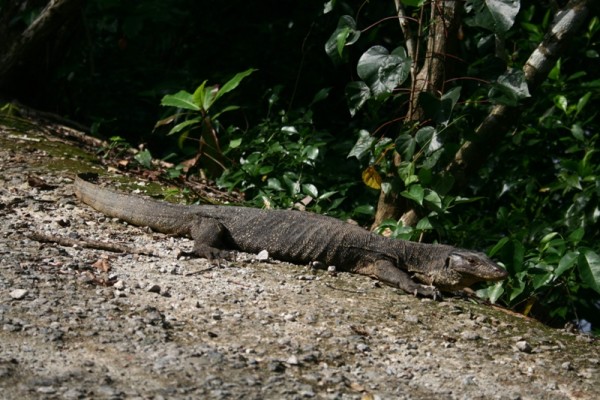
A monitor Lizard chills at the wetlands.
Wetlands in Singapore
In Singapore, the Sungei Buloh Wetland Reserve at Kranji, was officially gazetted as a nature reserve on 1 January 2002. This 130-hectare wetland is home to many species of flora and fauna and an important feeding stop for migratory birds along the East Asian – Australian flyway. Each year, up to 50,000 birds rest at Sungei Buloh Wetland Reserve before moving off!

What lies beneath the waters.
Wetlands exhibit at S.E.A. Aquarium
At S.E.A. Aquarium’s Mangrove Habitat, catch a glimpse of the marine life that calls wetlands home, Among the residents here is a well-known sharp shooter – do you know what we’re referring to? Watch this space as we reveal this Robin Hood counterpart in an upcoming post.
Did you know…

Eat less prawns!
Photo credit: Wikipedia
Eating prawns contribute to the destruction of wetlands?
Aquaculture of prawns requires the destruction of mangrove areas. That’s bad because once the mangroves are gone, the coastline gets affected by coastal erosion, which harms coral reefs and seagrass beds. The elimination of mangroves also removes habitats for animals.

Plants in the wetlands have medicinal benefits.
Photo credit: Wikipedia
Wetlands can improve and save lives?
Tree bark in wetlands is used to make boats and furniture. Many wetlands plants are also used for medicines, to counter conditions like inflammation, skin problems, diarrhea and loss of appetite.

Resting place.
Photo credit: Wikipedia
Wetlands is both home and hotel?
One of its biggest functions is to provide a habitat for birds – for breeding, nesting, feeding, and social interactions.
For migratory birds, wetlands provide a much needed place to rest on their long journey to the southern hemisphere. Experts say they these birds will use 100 resting sites during their trip. Alterations to these resting sites can affect the health of migratory birds.
[CHALLENGE] Do you know your wetlands?
Think you’re a wetlands expert now? Try your hand at answering a series of questions we’ll post up this coming week. And you may just win some prizes from the Marine Life Park.